Inheritance
WHO CAME BEFORE
The Line
A dynasty is a sequence of people, not a progress bar.
Reigns, relationships, heirs, cadet branches, and the choices that survived their authors remain visible in one continuous family record.

Found a house. Raise heirs who can obey you, refuse you, or surprise you. Intervene when the bloodline cannot afford their will, then let the Soul Teller write what your family became.
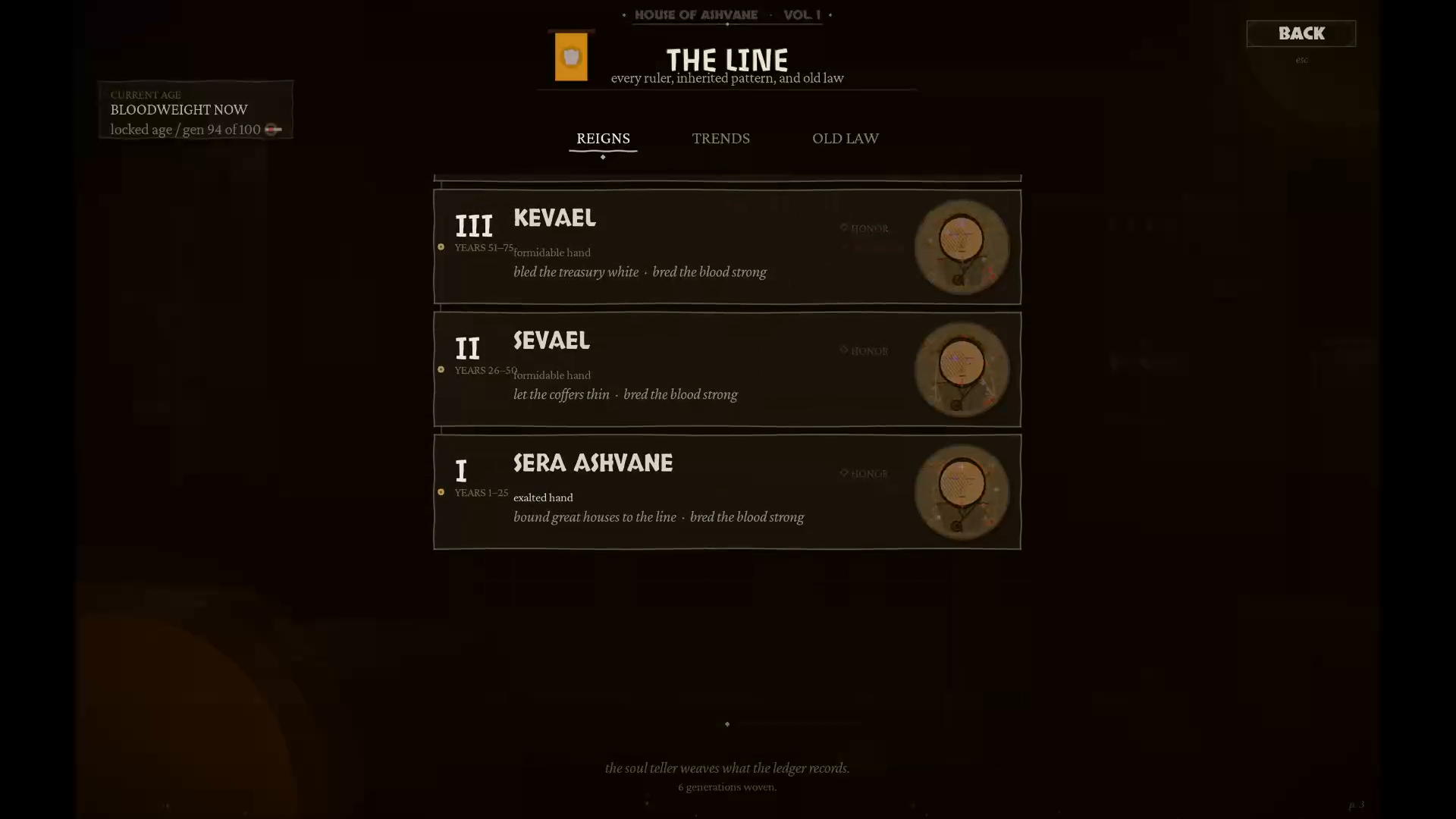
Founding begins in Year 1. Courtship, marriage, reign, death, and succession consume a life in order. The dates give every heir a place in the same history—and give the Soul Teller something more human than a generation counter to remember.
Choices arrive as scenes, not dashboard notifications. The heir speaks, the player intervenes or lets the will stand, and the result earns enough time and ceremony to feel like history changing.
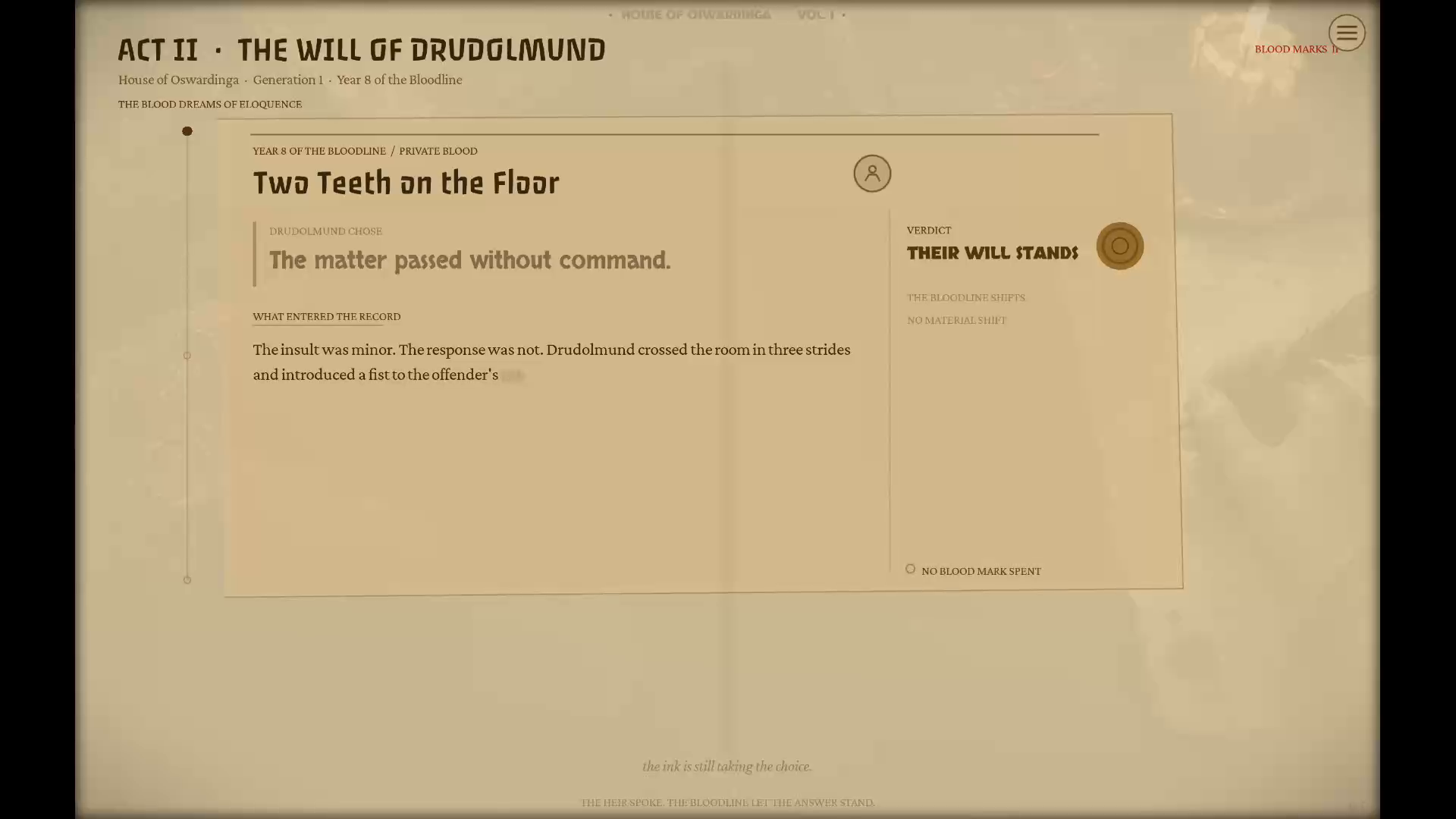
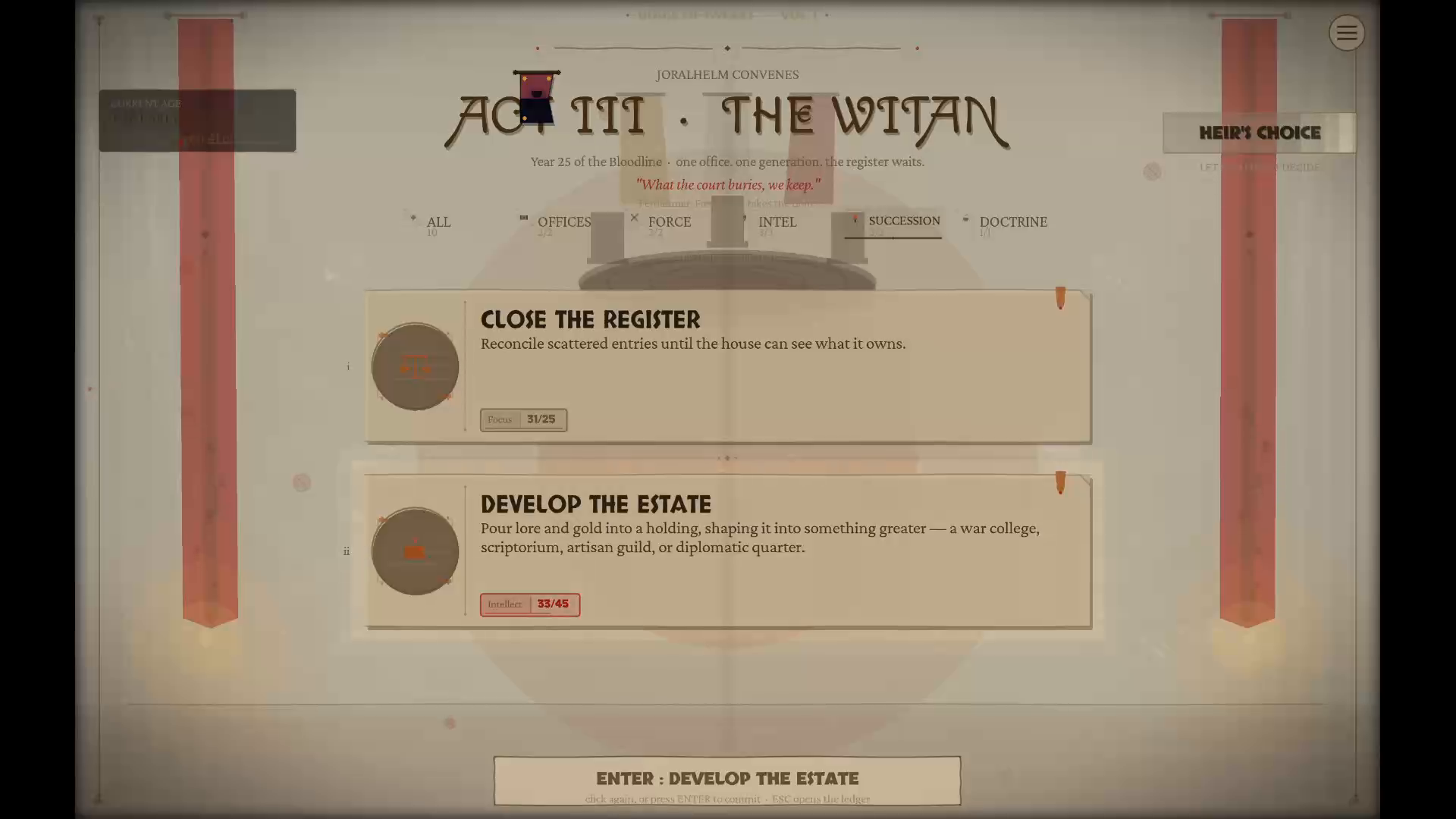
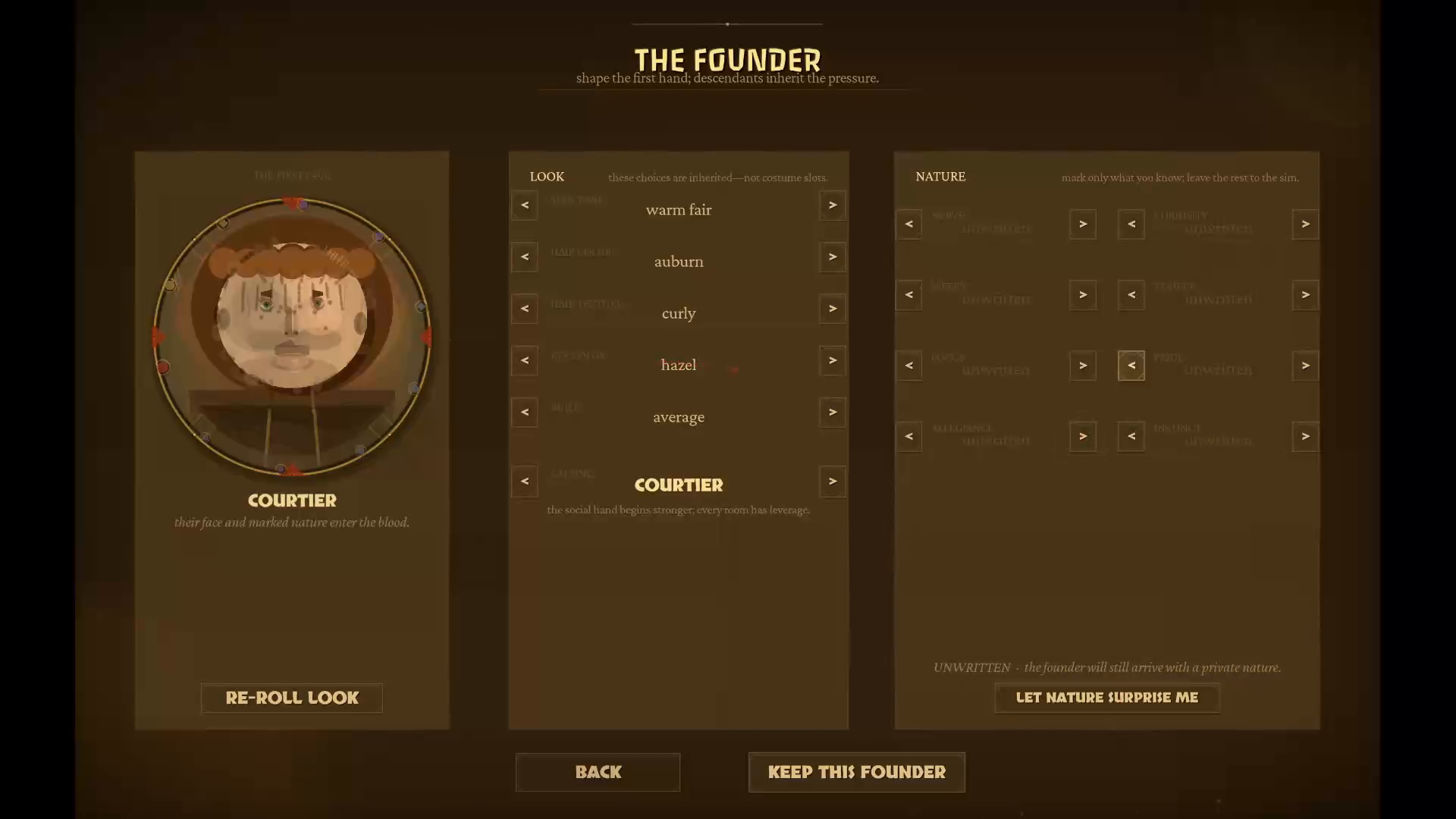
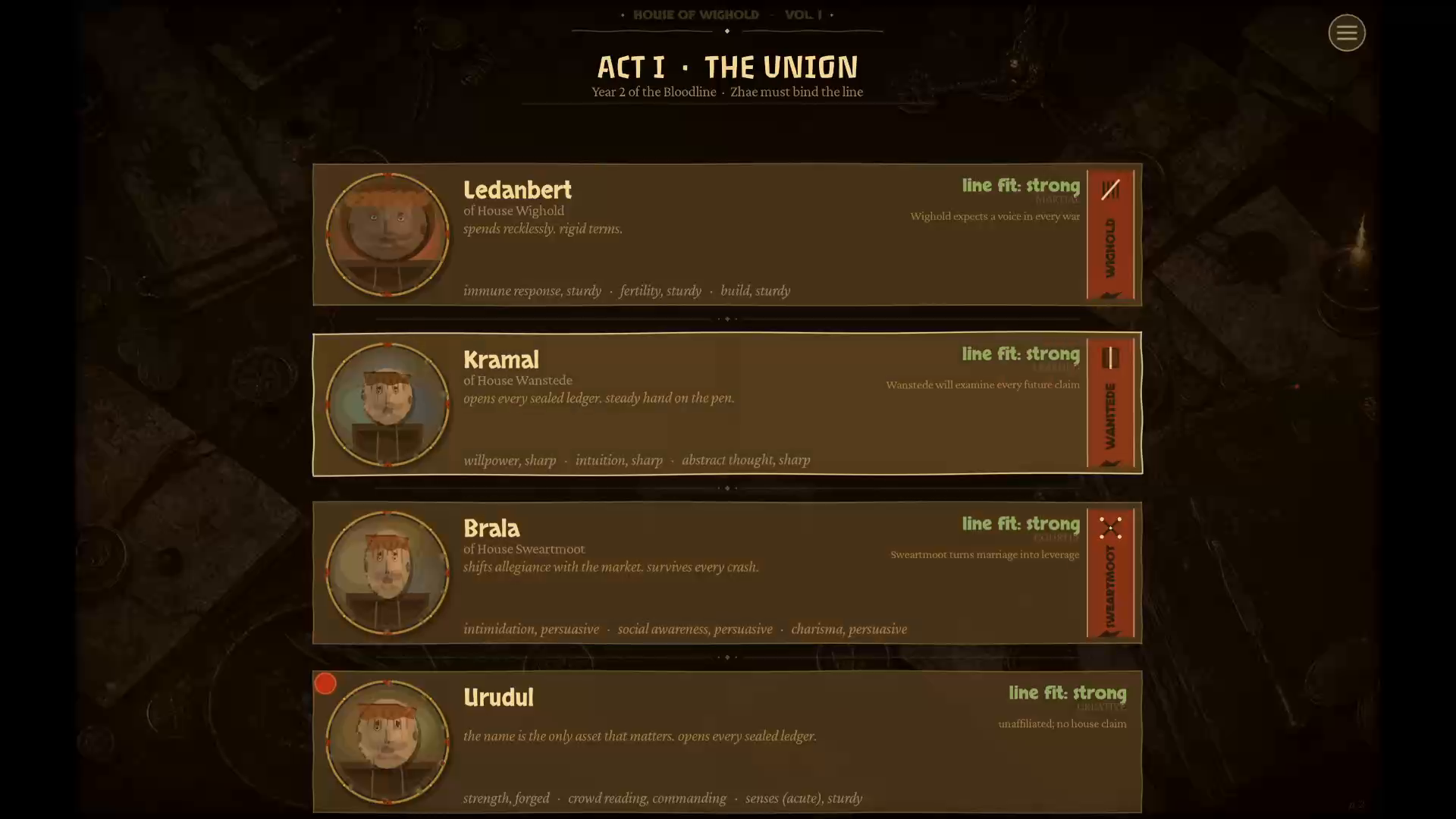
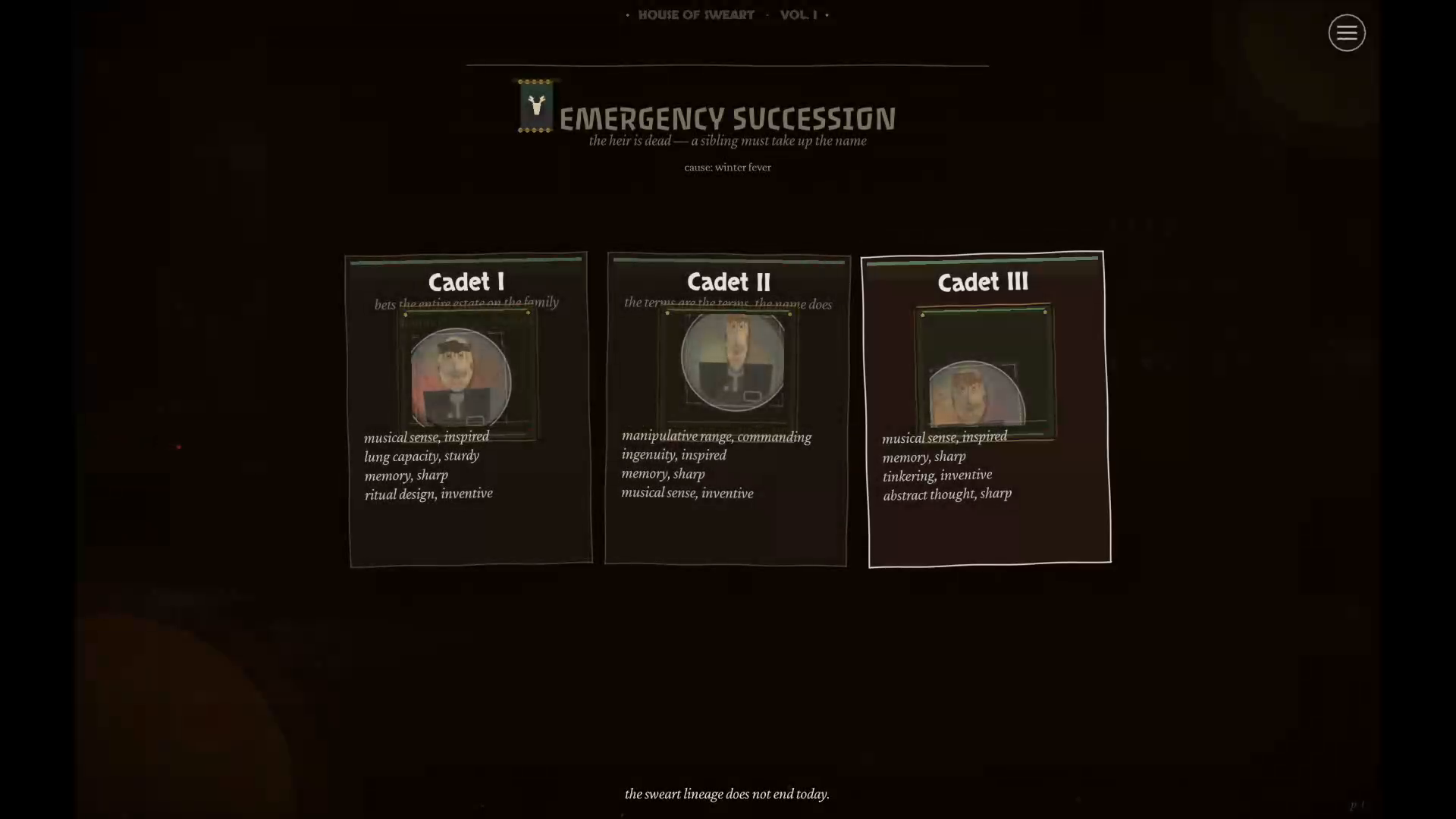
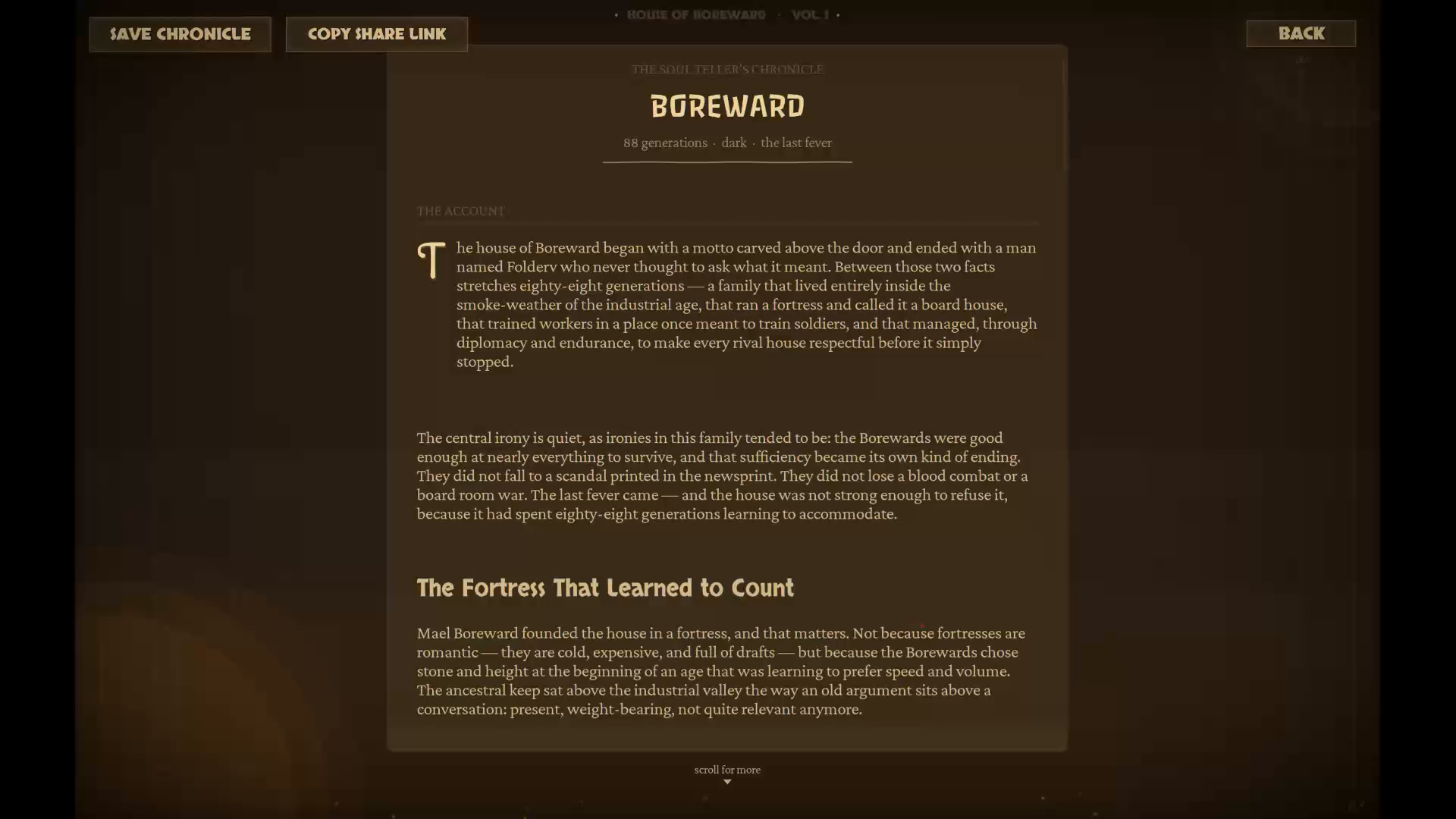
Every matter now arrives with readable stakes and a visible ritual. Choose for the house, or press Heir's Choice and let temperament, doctrine, and circumstance decide what this person would actually do.
The roll, failure, success, cost, and consequence receive their own pageantry. The point is not merely to select an option. It is to feel the instant a private preference becomes the house's public history.
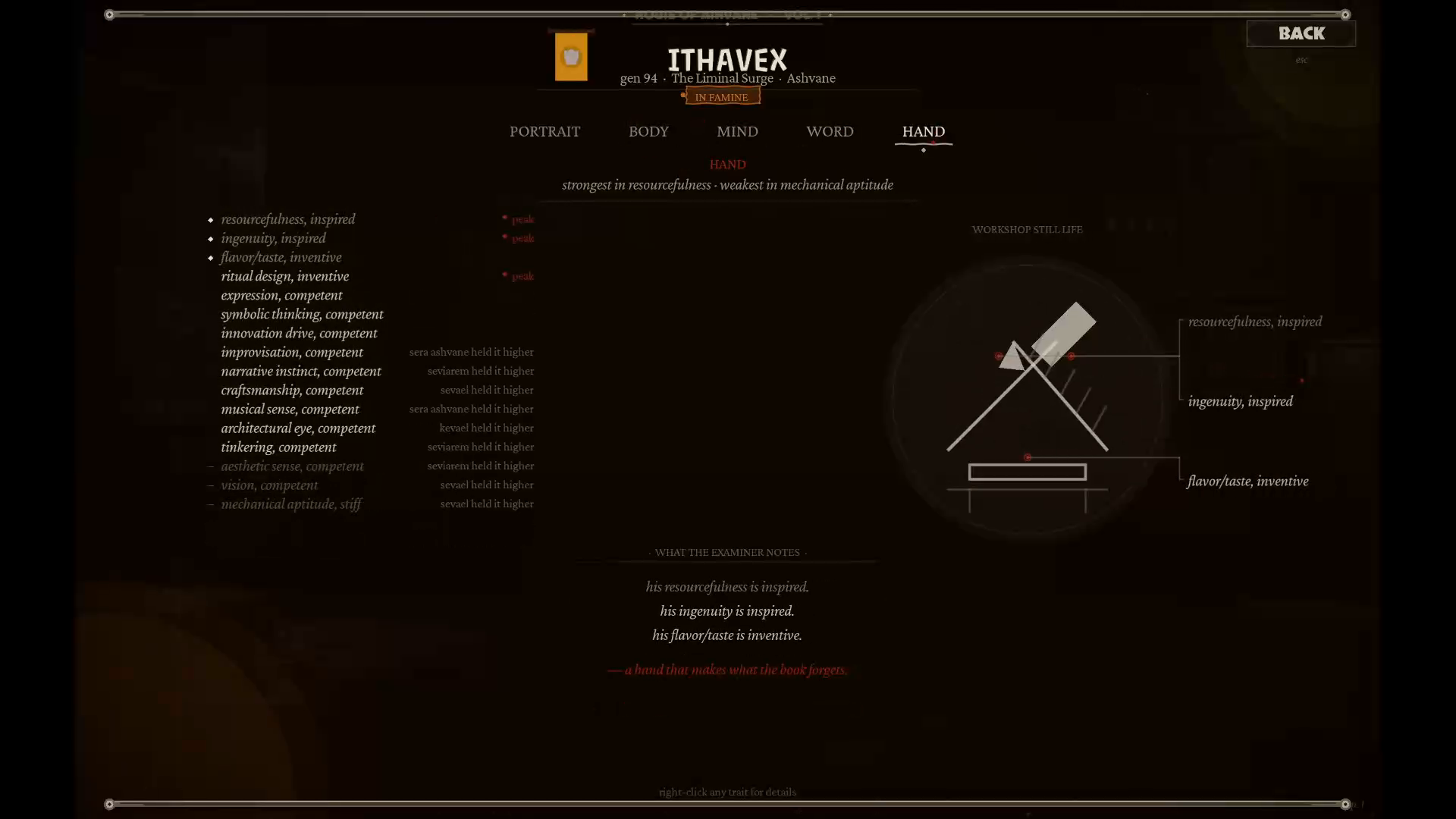
A face, a body, a mind, a temperament, a date, a partner, and a path they would take without you. The player is not assigning perks to a vessel. The player is deciding when a family may overrule a person.
Matchmaking comes before succession. Reigns have length. Emergency heirs carry visible context. The final chronicle can name not only what happened, but when—and whose unfinished life paid for it.
Two cuts of the current game: one follows the player through the decisions; the other follows the record those decisions leave behind.
The person, the family, and the world keep different accounts. A choice can alter all three, and the final chronicle must reconcile them.
WHO CAME BEFORE
A dynasty is a sequence of people, not a progress bar.
Reigns, relationships, heirs, cadet branches, and the choices that survived their authors remain visible in one continuous family record.
WHAT THE HOUSE CARRIES
History is not flavor text. It is pressure.
Temperament, doctrine, rivals, wounds, and accumulated decisions change what the next heir can attempt and what the court will permit.
WHAT THE WORLD REMEMBERS
Other houses keep their own version of your story.
Claims, marriages, rivalries, and standing move outside the family. Your private intention becomes public history once another house answers it.
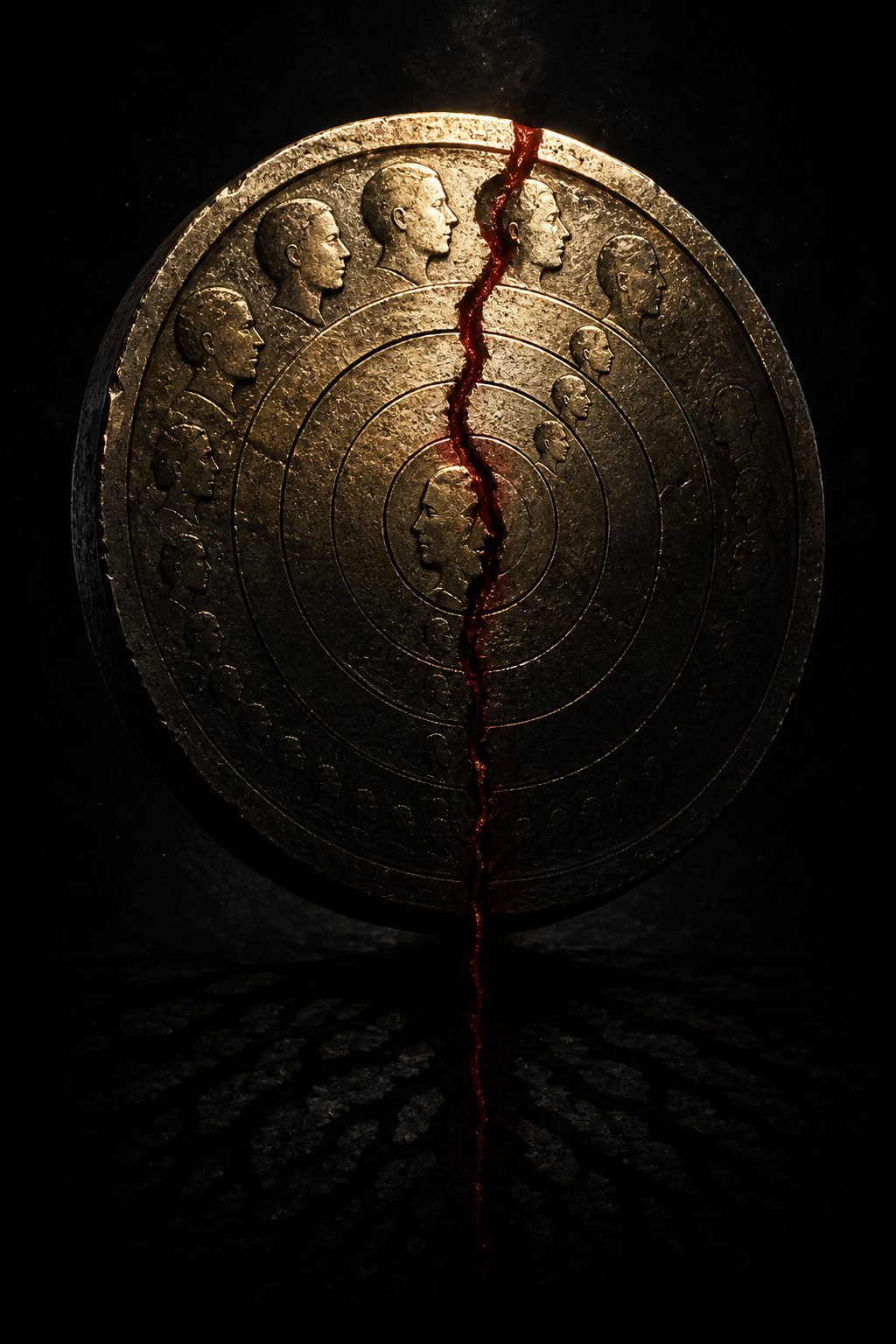
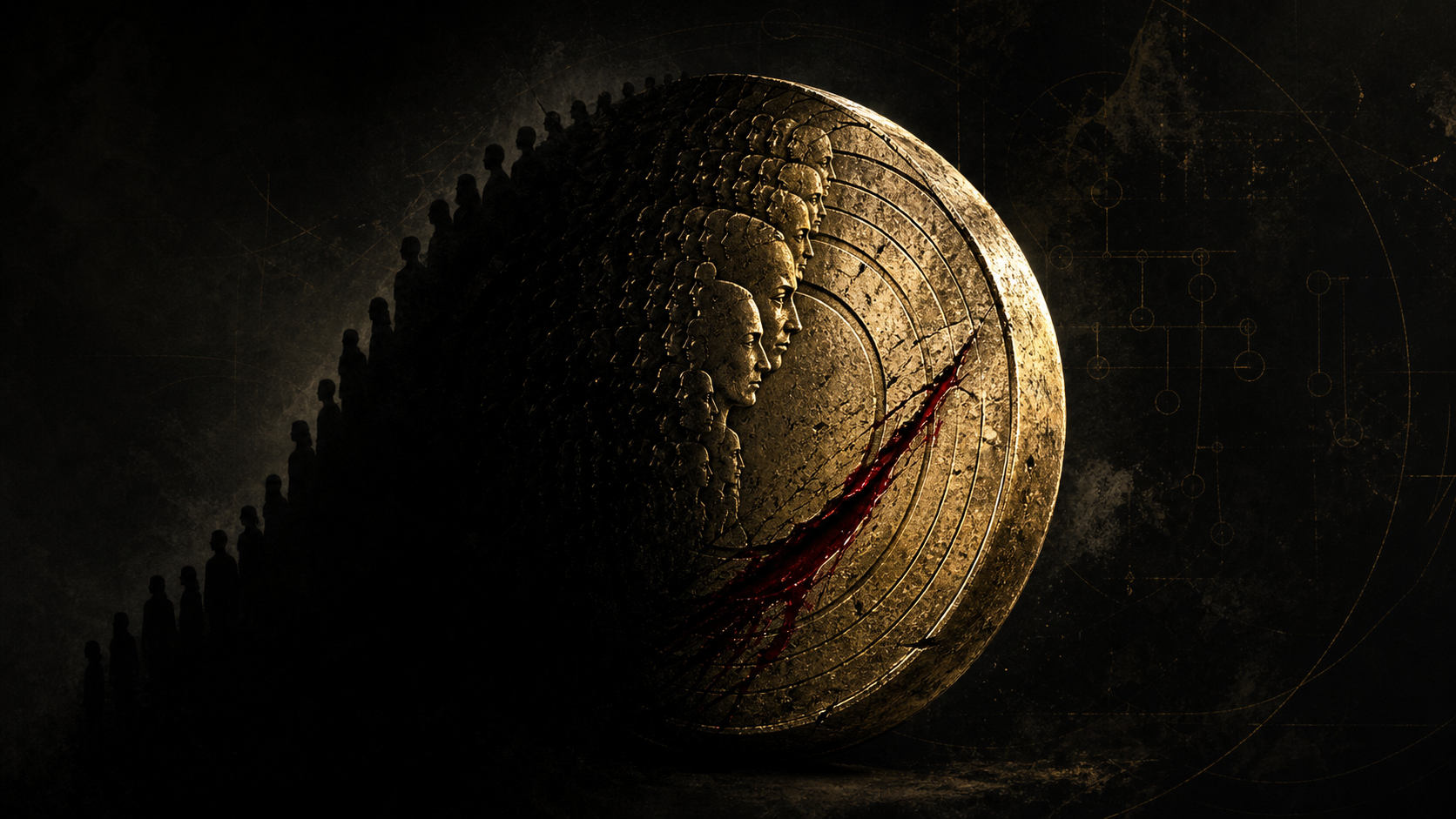
Each face struck into the coin is another life the next heir did not choose—and cannot entirely escape.
Bloodweight is built around a repeated human problem: an heir wants something, the house wants something else, and the player must decide which desire becomes history.
Choose the face, physical cast, and general disposition of the first person who must carry the house name.
Each heir reaches for a life of their own. Let their will stand, or spend the bloodline's authority to force another answer.
Read the matter, weigh the odds, choose for the house, or ask what this heir would choose. Then watch the verdict arrive.
Partners come before successors. Reigns consume years. Death, emergency succession, and inheritance decide who receives the unfinished house.
Rival houses, claims, marriages, and public standing move together. The court is where private blood becomes political fact.
Named heirs, reigns, verdicts, rivalries, and inherited consequences become the final literary account of what the player actually lived.
At the end of a run, Bloodweight sends the complete dynasty record to the site: named heirs, dates, reigns, verdicts, partners, rival houses, and the long arithmetic of blame.
Not heroes in the manner of songs, nor villains in the way of simple tales, but something more complex and terrible: a family that refused to die.
They were certain that what they were accumulating was legacy. What they were accumulating was weight.
He built the wall and named it mercy. The plague, it should be noted, has no opinion about architecture.
Bloodweight is out now on Steam and on the Apple App Store for iPad. The site is the living archive: chronicle generator, manual, press kit, comparison tools, and the place where extinct families keep talking.