Current Player's Guide
How Bloodweight Moves
The essentials of the current game: heirs with wills of their own, intervention, the Witan, lived time, succession, rival houses, and the record sent to the Soul Teller.
You Are The Bloodline's Pressure
Bloodweight does not hand you a dynasty as a collection of bonuses. It hands you people. Each heir has a face, body, temperament, partner, place in time, and path they would follow without your interference.
You are the authority that persists between them. Sometimes the wisest move is to let an heir's will stand. Sometimes the house spends its limited authority to force another answer. The game is the argument between those two instincts.
Begin With A Founder
A new game opens with the founder. Keep the generated person or customize their appearance, physical cast, and general disposition. This is the first named life in the record, not a detached build screen.
The bloodline begins in Year 1. From that point forward, courtship, reigns, deaths, and successions occupy lived time. The Line shows who held the house and when.
Read The Heir
Before deciding, read the person. Their tendencies tell you what they value, what they fear, and the sort of choice they would make alone. Their traits affect what they can survive. Their history explains why the same command lands differently on two members of the same family.
Follow Or Interrupt
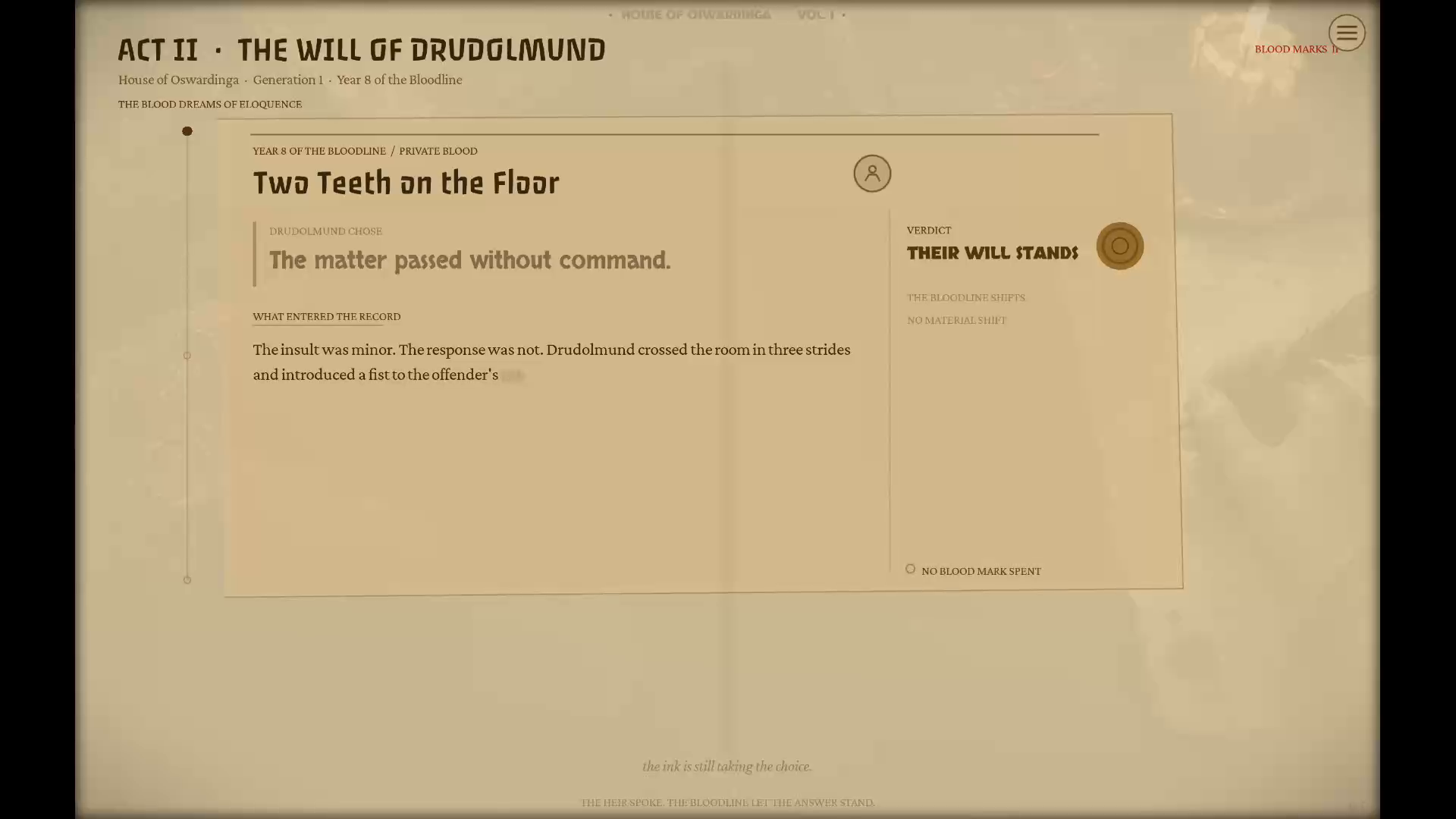
Individual heir events offer the cleanest expression of the game. Let the heir follow their own path, or interrupt on behalf of the dynasty. The result is revealed as a gamble and then entered into the Chronicle.
Convene The Witan
The Witan brings consequential house matters before the court. Read the requirement, cost, and likely pressure behind each option. Choose one yourself, or use Heir's Choiceto select the answer this heir's temperament and circumstances support.
Resolution is not instant. The game stages the uncertainty, reveals the verdict, and shows what moved. Failure is not a dead click; it is part of the family record.
Blood Marks
Match Before Succession
An heir first forms a union between houses. The match brings a partner, political context, and the possibility of successors. The order matters: a successor is the consequence of a life and relationship, not a fresh card dealt after a turn.
When the expected line fails, Emergency Succession presents the surviving cadets with their context intact. Whoever takes the seat inherits the same house, rivals, and accumulated Weight.
Watch The Three Records
The Line remembers people and reigns. The Weight shows what the family carries. The Public Record shows the rival houses, claims, and relationships that exist outside the family's preferred story.
These views are connected. A private event can alter the house; the house can alter a rival claim; that claim can return during matchmaking, the Witan, or succession.
Leave A Chronicle
When the bloodline ends, the Soul Teller receives the named heirs, dates, reigns, verdicts, partners, rivalries, and consequences produced by the run. It turns them into a permanent, shareable account—not a generic summary pasted over the ending.
The useful first-run rule